How to Fix Damaged Hair?
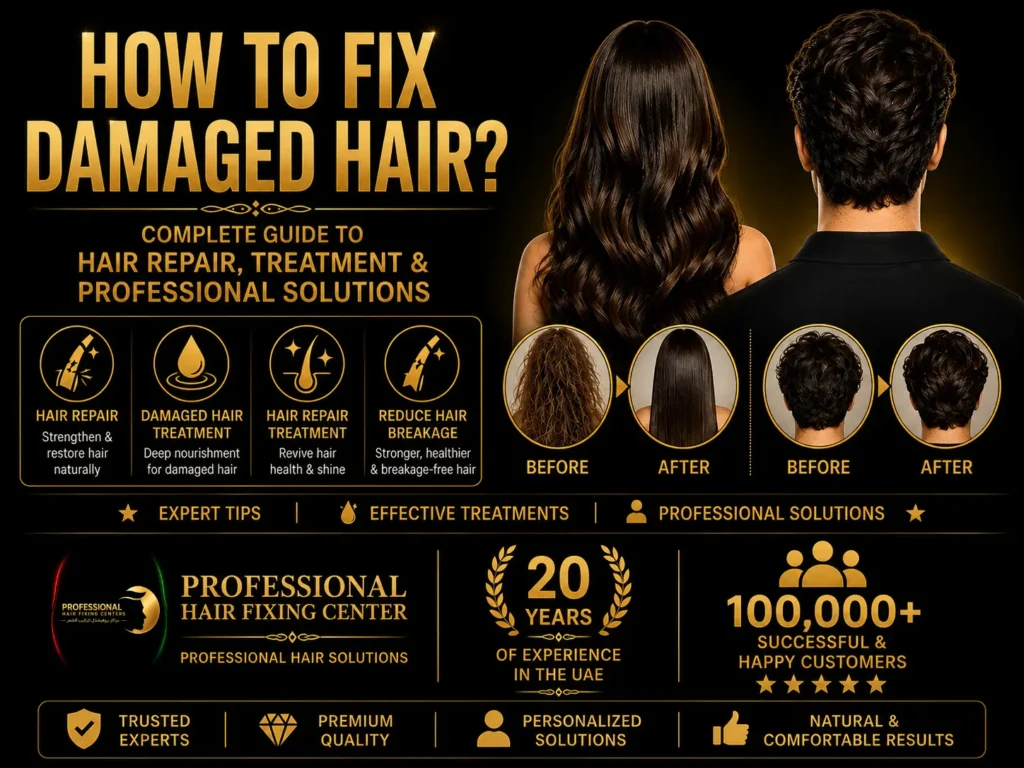
Damaged hair is one of the most common hair concerns for both men and women. Hair can become dry, weak, rough, frizzy, tangled, brittle, or prone to breakage because of heat styling, bleaching, coloring, chemical treatments, excessive brushing, tight hairstyles, environmental exposure, and improper hair-care practices. If you are searching for how to fix damaged hair, the first step is to understand the type and cause of the damage. Mild dryness and roughness can often be managed with a consistent hair-care routine, while severe breakage, extensive chemical damage, thinning, or hair loss may require a professional hair solution. Professional Hair Fixing Center provides professional hair solutions in the UAE for people dealing with damaged, thinning, or missing hair. With 20 years of Working in the UAE and more than 100,000 successful and satisfied customers, the company has extensive experience in helping clients find suitable solutions for different hair concerns. It is important to understand that damaged hair cannot always be completely restored to its original biological condition. The visible hair shaft is non-living tissue, so severely damaged sections cannot regenerate themselves. However, the appearance, softness, manageability, and protection of existing hair can often be improved with appropriate care. When natural hair is severely damaged, thin, or missing, professional hair fixing solutions can offer another option for improving overall hair appearance. This comprehensive guide explains how to repair damaged hair, the most common causes of hair damage, effective hair repair treatment options, ways to prevent hair breakage, and when professional hair solutions may be appropriate. How to Fix Damaged Hair? The best way to fix damaged hair is to identify the cause, stop or reduce ongoing damage, improve conditioning and protection, and use a hair-care or professional solution appropriate for your condition. For mild damage, you can begin with a simple routine that includes gentle cleansing, regular conditioning, reduced heat styling, careful detangling, and an appropriate hair repair treatment. For more severe damage, especially when hair is breaking extensively or there is significant thinning or hair loss, simply changing shampoo may not be enough. A professional consultation can help determine whether you need a specialized hair treatment, trimming, or a professional hair solution. 8 Steps to Repair Damaged Hair Identify the cause of the damage. Reduce heat styling. Limit unnecessary chemical treatments. Use a suitable shampoo and conditioner. Apply an appropriate hair repair treatment. Handle wet and dry hair gently. Trim severely split or damaged ends. Consider professional hair solutions for severe damage or hair loss. The right approach depends on whether your main concern is dryness, split ends, chemical damage, heat damage, mechanical breakage, thinning, or hair loss. What Is Damaged Hair? Damaged hair is hair that has experienced physical, chemical, or environmental stress that affects its structure, appearance, texture, flexibility, or strength. The outer layer of the hair is called the cuticle. It helps protect the inner parts of the hair shaft. Repeated exposure to damaging factors can affect the cuticle and make the hair feel rougher, drier, and more difficult to manage. Hair damage can develop gradually. Someone who frequently colors or straightens their hair may not notice major changes after one treatment, but repeated processing can gradually increase dryness, roughness, and breakage. Common Signs of Damaged Hair You may have damaged hair if you notice: Rough or coarse texture Dryness Frizz Split ends Increased tangling Dull appearance Reduced elasticity Hair that breaks easily Uneven-looking ends Excessive flyaways Difficulty styling the hair Hair that feels weaker than before The presence of one symptom does not necessarily mean severe damage. For example, hair may feel dry because it needs more conditioning, while repeated snapping and extensive split ends may indicate more significant structural damage. What Does Damaged Hair Look Like? Damaged hair can look different depending on the cause and severity. Dry damaged hair may appear dull and frizzy. Chemically processed hair may feel rough or unusually porous. Heat-damaged hair may become brittle and difficult to style. Mechanical damage may appear as short broken hairs around the hairline and throughout the lengths. Signs to Look For: Split ends: The end of a strand divides into two or more sections. Breakage: Hair snaps somewhere along the shaft instead of remaining intact. Frizz: Damaged or raised cuticles can contribute to an uneven, frizzy appearance. Tangles: Rougher hair surfaces can increase friction between strands. Loss of shine: Damaged hair may reflect light less evenly. Reduced elasticity: Weakened hair may not return to its original shape as easily after stretching. If several of these signs occur together, reviewing your hair-care routine can help identify potential sources of damage. What Causes Hair Damage? Understanding the cause is essential when learning how to repair damaged hair. If the source of damage continues, even an effective treatment may provide only temporary improvement. Heat Styling Frequent high-temperature styling is a common cause of hair damage. Heat can come from: Hair straighteners Curling irons Hot brushes Blow dryers Heated styling tools Repeatedly exposing the same hair sections to high temperatures can increase dryness and brittleness. You do not necessarily have to stop using heat completely. Instead, reduce the temperature when possible, limit how frequently you use heated tools, use heat protection, and avoid repeatedly applying heat to the same section. Chemical Treatments Chemical processing can alter the structure and condition of hair. Common chemical services include: Bleaching Permanent coloring Chemical straightening Relaxing Perming Bleaching can be particularly demanding because it removes natural pigment through a chemical process and can weaken the hair structure. If you regularly use chemical treatments, try to avoid repeatedly processing already weakened lengths. Professional guidance can also help you determine how frequently your hair can reasonably undergo chemical services. Excessive Washing Washing your hair is important for maintaining scalp hygiene, but your washing routine should suit your scalp and hair type. There is no universal number of washes that is ideal for everyone. Someone with an oily scalp may need more frequent cleansing, while someone with dry or textured hair may wash less
 EN
 AR