

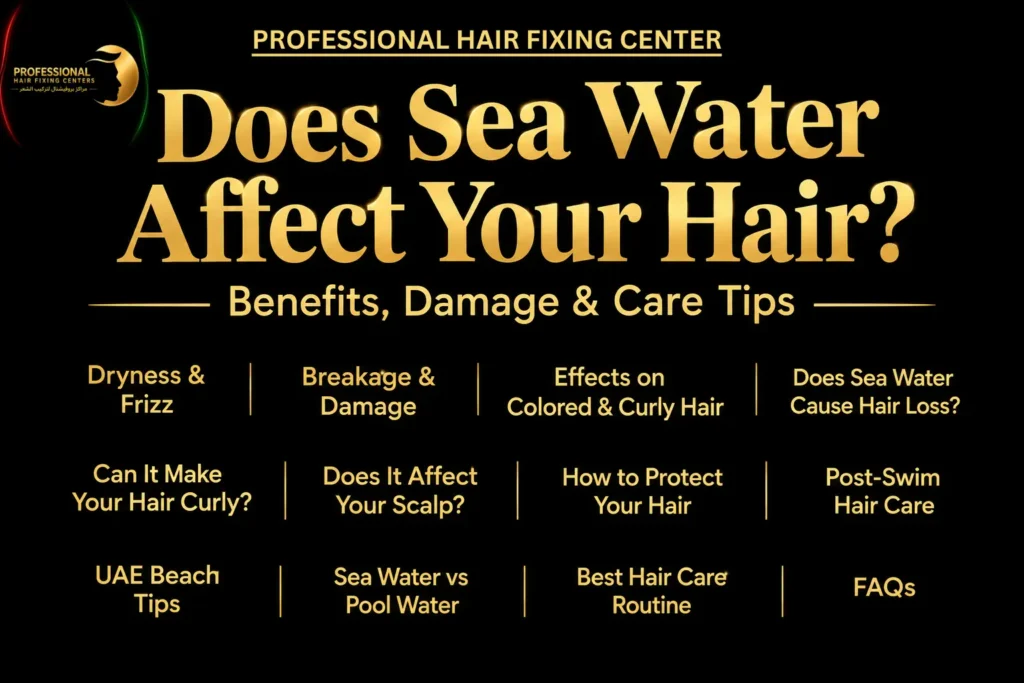
Does Sea Water Affect Your Hair? Expert Guide to Salt Water, Damage & Hair Care
Yes, sea water can affect your hair. Frequent or prolonged exposure to salt water can make hair feel dry, rough, tangled, and more difficult to manage. The effect can be stronger when swimming is combined with intense sunlight, heat, wind, and humidity. For occasional beach visits, healthy hair can usually tolerate seawater exposure when you follow a proper after-swim routine. However, people with dry, bleached, colored, chemically treated, or already damaged hair may notice the effects more quickly. If you regularly swim in the sea, understanding how salt water affects the hair and knowing how to protect it can help maintain its softness, moisture, shine, and manageability.
Does Sea Water Affect Your Hair?
Yes, sea water affects your hair mainly by contributing to dryness and changes in texture.
Seawater contains dissolved salts and minerals. When your hair is exposed to salty water, some of the water in the hair can evaporate while salt residue remains on the strands. Repeated exposure can leave hair feeling less soft and more difficult to detangle.
Common changes after frequent seawater exposure include:
- Dry or coarse-feeling hair
- Increased tangling
- Frizz
- Reduced smoothness
- Less shine
- Brittle-feeling ends
- Increased breakage in already-damaged hair
- Temporary changes in natural curl or wave pattern
The actual effect depends on your hair type, condition, swimming frequency, and how you care for your hair before and after swimming.
Why Does Sea Water Make Hair Dry?
Salt water can contribute to moisture loss from the hair, which is why hair may feel drier after swimming in the sea.
Healthy hair depends on an appropriate balance of water, lipids, and structural proteins. Repeated environmental exposure can affect the hair’s surface and make it feel rougher.
There is another factor that is easy to overlook: what happens after swimming.
If salt water remains on your hair while you sit in strong sunlight, the water evaporates and leaves salt residue behind. At the same time, UV exposure and heat can place additional stress on the hair.
This combination can make your hair feel considerably drier than seawater alone.
Is Sea Water Bad for Your Hair?
Occasional seawater exposure is not necessarily harmful to healthy hair. The concern is repeated exposure without adequate protection and conditioning.
A day at the beach does not automatically mean your hair has been permanently damaged. Hair condition generally depends on the overall pattern of exposure.
For example:
Occasional swimming + fresh-water rinsing + conditioning = lower risk of noticeable dryness.
Frequent swimming + prolonged salt exposure + strong sun + damaged hair + excessive heat styling = greater risk of dryness and breakage.
This distinction is important because seawater should not automatically be described as either completely good or completely bad for hair.
Can Sea Water Damage Hair?
Frequent seawater exposure can contribute to hair damage, particularly when the hair is already fragile.
Hair that has been bleached, chemically straightened, heavily colored, or repeatedly exposed to heat may already have a compromised outer structure.
When that hair is repeatedly exposed to salt water, sunlight, and environmental conditions, it can become:
- More difficult to detangle
- More prone to dryness
- Less flexible
- More susceptible to breakage
- Rougher to the touch
The solution is not necessarily to avoid the sea. Instead, reduce unnecessary exposure and establish a consistent protective routine.
Does Sea Water Cause Hair Loss?
Seawater is not generally considered a direct cause of permanent hair loss.
This is an important distinction. Salt water can contribute to dryness and breakage, which may make hair appear thinner or less dense. But hair breakage is different from hair loss originating from the follicle.
If you are experiencing persistent or significant hair shedding, it is better to investigate the underlying cause rather than assuming seawater is responsible. Hair shedding can have many possible causes, including genetics, hormonal changes, nutritional issues, stress, medications, and scalp conditions.
For persistent hair loss, professional medical evaluation is more appropriate than changing your beach routine alone.
Can Sea Water Make Your Hair Grow?
There is no established evidence that swimming in seawater directly stimulates hair growth. Salt water may temporarily change the texture or appearance of your hair, making waves or curls look more pronounced. That visual effect should not be confused with increased hair growth. Hair growth occurs at the follicle level beneath the scalp, while seawater primarily comes into contact with the hair shaft and scalp surface.
Can Sea Water Make Hair Curly?
Yes, seawater can temporarily make naturally wavy or curly hair appear more textured.
Salt can increase friction between individual hair strands, creating a rougher texture. This can make natural waves and curls appear more defined.
That is the reason many people associate beach days with “beach waves.”
However, the effect is temporary. Once the hair is washed and conditioned, the texture generally returns toward its normal pattern.
Does Sea Water Affect Colored or Bleached Hair?
Yes. Colored and bleached hair may be more vulnerable to the drying effects of seawater and environmental exposure.
Bleaching and some chemical treatments can make hair more porous and fragile. When this hair is repeatedly exposed to salt water, sunlight, heat, and wind, dryness and roughness may become more noticeable.
If you color or bleach your hair and regularly swim in the sea, consider:
- Rinsing your hair with fresh water before swimming.
- Applying a suitable leave-in conditioner.
- Covering your hair when practical.
- Rinsing immediately after swimming.
- Conditioning your hair regularly.
- Reducing unnecessary heat styling.
How Does Sea Water Affect Curly Hair?
Curly hair can be particularly sensitive to moisture imbalance.
Because of its structure, natural scalp oils may not distribute as easily along curly strands as they do along straight hair. Repeated salt-water exposure can therefore make curls feel drier and more difficult to detangle.
After swimming, curly hair may experience:
- Increased frizz
- Less softness
- More tangling
- Reduced curl definition
- Dry ends
A gentle cleansing routine followed by adequate conditioning can help restore manageability.
Does Sea Water Affect the Scalp?
Sea water can leave the scalp feeling dry or tight in some people, especially after prolonged exposure.
The scalp is different from the hair shaft because it is living skin. Salt water, sun, heat, and wind can all influence how the scalp feels.
After swimming, rinse your scalp thoroughly with fresh water. Avoid aggressive scratching or harsh scrubbing if the scalp feels irritated.
If persistent itching, redness, scaling, or other scalp symptoms develop, consider consulting a dermatologist rather than assuming seawater is the only cause.
How Can You Protect Your Hair From Sea Water?
The best strategy is to protect your hair before swimming and remove salt residue afterward.
1. Wet Your Hair Before Swimming
Rinse your hair thoroughly with fresh water before entering the sea.
This is a simple step that can help reduce the amount of seawater your hair absorbs.
2. Use a Leave-In Conditioner
A suitable leave-in conditioner can help improve softness and manageability while providing an additional conditioning layer.
Apply it particularly to the mid-lengths and ends if those areas tend to become dry.
3. Wear a Swimming Cap
A swimming cap can reduce direct exposure to seawater.
It can be especially useful for people who swim frequently or have fragile, colored, or bleached hair.
4. Rinse Your Hair Immediately After Swimming
This is one of the most important steps.
Use fresh water to remove salt and mineral residue after leaving the sea.
The sooner you rinse, the less time salt residue remains on your hair.
5. Condition Your Hair
After cleansing, use a suitable conditioner to improve softness and manageability.
If your hair is consistently dry, incorporating a deeper conditioning treatment into your routine may be useful.
6. Reduce Heat Styling
Avoid immediately exposing already-dry hair to excessive heat from straighteners, curling irons, or very hot blow-drying.
Give your hair time to recover after swimming.
What Should You Do to Your Hair After Swimming in the Sea?
A practical post-beach routine is:
Rinse → Cleanse when necessary → Condition → Detangle gently → Moisturize → Dry gently.
Step 1: Rinse
Use fresh water to remove salt.
Step 2: Cleanse
Use a suitable shampoo when your hair or scalp needs cleansing. You do not necessarily need aggressive shampooing after every short swim.
Step 3: Condition
Apply conditioner to restore softness and improve manageability.
Step 4: Detangle Carefully
Use gentle movements and avoid aggressively pulling through knots.
Step 5: Moisturize
If your hair is particularly dry, a leave-in conditioner can provide additional moisture and manageability.
How Often Should You Wash Your Hair After Sea Swimming?
You should rinse your hair with fresh water after every sea swim.
Whether you need shampoo every time depends on your hair type, scalp, swimming frequency, and the products you use.
Someone swimming briefly once a week may have different needs from someone swimming in the sea every day.
The goal is to remove salt and buildup without unnecessarily stripping the hair.
Does Sea Water Affect Hair More in the UAE?
It can, because a UAE beach day may involve several environmental factors at the same time.
For people swimming around Dubai, Abu Dhabi, Sharjah, Ajman, Fujairah, and other coastal areas of the UAE, seawater may be only one part of the exposure.
A typical beach environment can combine:
- Salt water
- Strong sunlight
- High temperatures
- Wind
- Humidity
- Frequent outdoor exposure
These conditions can collectively make hair feel drier and harder to manage.
Therefore, UAE residents who swim regularly should consider both seawater protection and general environmental hair care.
Sea Water vs. Swimming Pool Water: Which Is Worse for Hair?
Neither should automatically be labeled as universally worse.
Seawater exposes hair primarily to salt and naturally occurring minerals.
Swimming pools may expose hair to chlorine and other chemicals used to maintain water quality.
Both environments can contribute to dryness when exposure is frequent. Your hair condition, swimming frequency, and after-swim care are more important than simply choosing one type of water.
Who Needs Extra Hair Protection When Swimming in the Sea?
Extra care is particularly useful if you have:
- Bleached hair
- Chemically treated hair
- Colored hair
- Naturally dry hair
- Curly or textured hair
- Brittle or damaged ends
- Frequent swimming habits
If your hair is healthy and you swim occasionally, a simple rinse-and-condition routine may be sufficient.
What Are the Best Beach Hair Care Tips?
For healthier-looking hair during beach season, follow these practical tips:
Before swimming:
- Wet your hair with fresh water.
- Apply suitable conditioner or leave-in treatment.
- Consider a swimming cap.
During your beach day:
- Avoid unnecessarily long periods with wet, salty hair.
- Protect yourself from excessive sun exposure.
- Avoid tight hairstyles that pull on wet hair.
After swimming:
- Rinse thoroughly with fresh water.
- Cleanse when necessary.
- Condition your hair.
- Detangle gently.
- Minimize high-heat styling.
Consistency matters more than using a large number of products.
Frequently Asked Questions About Sea Water and Hair
Does sea water affect your hair?
Yes. Frequent or prolonged exposure can contribute to dryness, roughness, tangling, frizz, and breakage, especially in already-damaged hair.
Is sea water good for your hair?
It can temporarily add texture and volume, but frequent exposure may contribute to dryness. Its cosmetic beach-wave effect should not be confused with a hair-health benefit.
Does sea water cause hair loss?
Seawater is not generally a direct cause of permanent hair loss. It can contribute to dryness and breakage, which may make hair appear thinner.
Should I wash my hair after swimming in the sea?
Yes. Rinse your hair thoroughly with fresh water after swimming. Shampoo according to your hair and scalp needs, followed by conditioner.
Can sea water make hair curly?
It can temporarily enhance natural waves and curls by adding texture, but it does not permanently change the hair’s natural curl pattern.
Does sea water damage colored hair?
Frequent exposure can contribute to dryness and may make color-treated hair appear less vibrant, particularly when combined with strong sunlight.
How can I protect my hair from seawater?
Wet your hair with fresh water before swimming, use a suitable conditioner or leave-in product, consider a swimming cap, and rinse thoroughly after swimming.
Does seawater cause dandruff?
Seawater is not a proven treatment for dandruff. In some people, prolonged salt exposure may leave the scalp feeling dry or irritated. Persistent scalp flaking should be assessed based on its underlying cause.
Can damaged hair recover from seawater exposure?
Hair that feels dry after seawater exposure can often become more manageable with proper cleansing, conditioning, gentle handling, and reduced environmental and heat stress. Severely damaged hair may require professional assessment.
Final Answer: Does Sea Water Affect Your Hair?
Yes, seawater can affect your hair, particularly when exposure is frequent or prolonged. Salt can contribute to dryness and rough texture, while sunlight, heat, wind, and humidity can add further environmental stress.
The good news is that you do not necessarily need to stop enjoying the beach.
A simple routine—protect your hair before swimming, rinse with fresh water afterward, condition regularly, detangle gently, and minimize excessive heat styling—can help keep your hair softer and more manageable.
For people in the UAE who regularly enjoy the coast, making these steps part of your normal beach routine is a practical way to reduce the unwanted effects of repeated seawater exposure.
 AR
AR  EN
EN